
Coaching vs. Therapy: Which Helps You Move Forward Faster After Divorce?
Therapy helps you heal emotional wounds from the past, while coaching helps you create a clear plan for your future.
After divorce, many people benefit from both — therapy for healing and coaching for rebuilding confidence and direction.
Why the Difference Matters
After divorce, you may feel lost, stuck, or unsure where to begin.
Both therapy and coaching offer support, but they serve different purposes.
Understanding their roles helps you choose the right path — or combine both for the strongest results.
💡 Voice- summary:
“Therapy helps you process your past, and coaching helps you design your future. Both can help you heal after divorce in different ways.”
What Therapy Focuses On
Therapy is a professional process led by a licensed therapist.
It helps you work through emotional pain, trauma, or mental health challenges that may have surfaced during or after your marriage.
Therapy Helps You:
Process grief, anger, or anxiety
Heal emotional or psychological wounds
Understand past patterns and triggers
Build tools for emotional regulation
Therapy looks backward to bring understanding and healing to your inner world — an essential step for emotional recovery.
What Coaching Focuses On
Divorce coaching, by contrast, is forward-focused and action-oriented.
It helps you rebuild your confidence, set goals, and design the next phase of your life after emotional healing has begun.
Coaching Helps You:
Create a vision for your future
Rebuild self-esteem and independence
Develop practical steps toward your goals
Stay accountable as you move forward
Coaching doesn’t replace therapy — it complements it by turning emotional recovery into meaningful life progress.
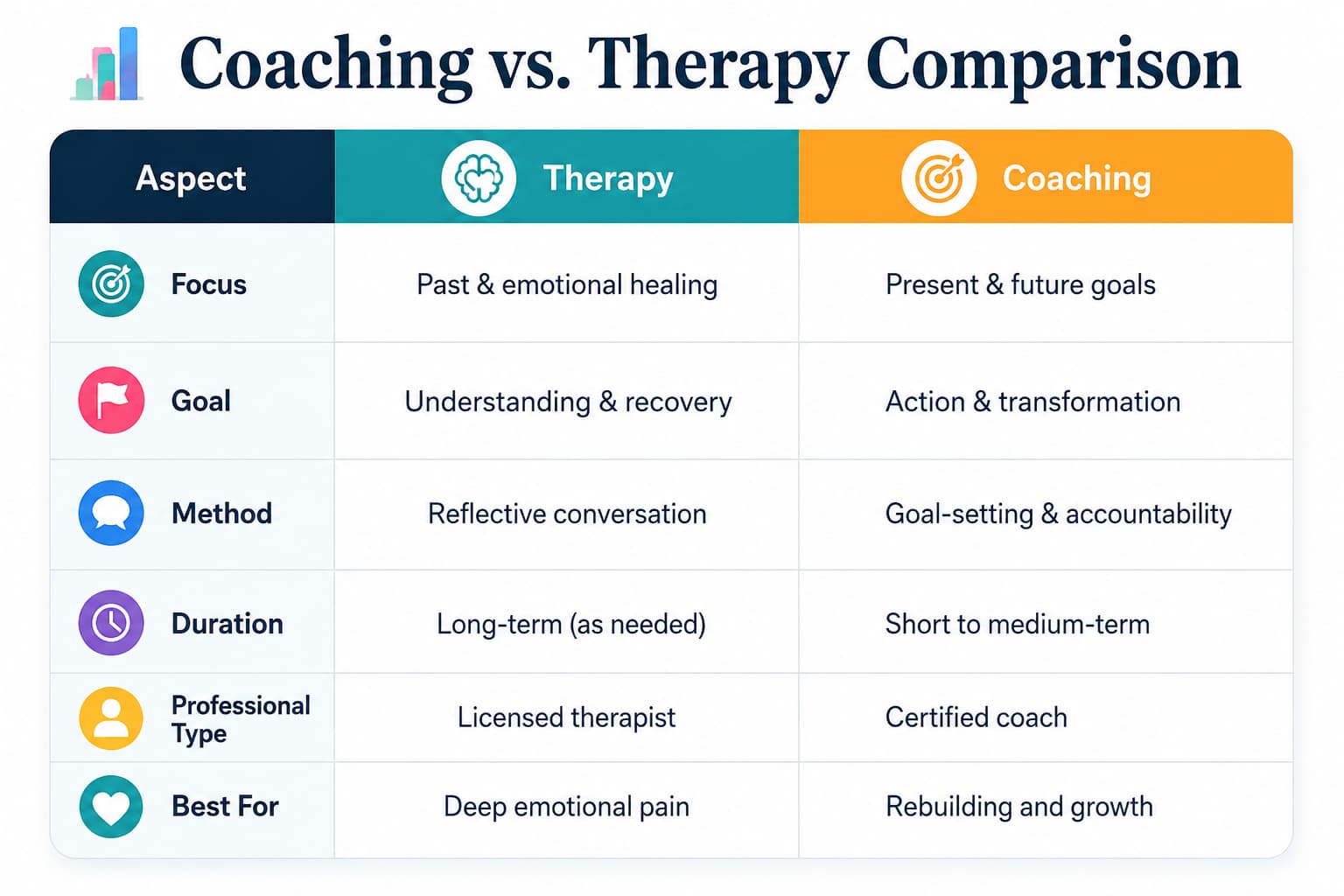
This table is highly snippet-friendly and voice-assistant compatible, especially for queries like “What’s the difference between coaching and therapy?”
Which Helps You Move Forward Faster?
It depends on where you are in your journey:
If you’re still processing grief, trauma, or depression → start with therapy.
If you’re ready to rebuild, set goals, and rediscover confidence → start with coaching.
Many people find success in combining both for full emotional and practical healing.
“Therapy helps you heal your heart. Coaching helps you rebuild your life.”
How Coaching Complements Therapy
A heart-centered divorce coach bridges the gap between emotional healing and purposeful living.
After therapy helps you process the pain, coaching empowers you to:
Define your next chapter
Create healthy new habits
Rebuild confidence and joy
Design a future aligned with your values
Together, they form a complete recovery path — healing first, growth second.
Real-Life Example
(Insert a brief client story here.)
“Therapy helped me process the grief of my divorce. Coaching helped me take action — find my confidence, set goals, and start living again.”
Including these testimonials enhances E-E-A-T and trustworthiness for readers and search engines alike.
Take the Next Step Toward Rebuilding
If you’ve already done some emotional healing, coaching is the next step toward lasting change.
Schedule your free discovery session today and explore how coaching can help you move forward with peace and confidence.
Voice Search Answer
“Therapy helps you heal your emotions after divorce. Coaching helps you take action and move forward. Many people use both for full recovery.”